China Export vs CE mark: what the Commission and the law say
A product shows a CE logo, and you cannot tell whether it is the real CE marking or a "China Export" lookalike.
CE does not mean China Export. The Commission said in 2008 it knew of no such mark; a lookalike is a CE marking drawn wrongly. A valid mark rests on the assessment and the signed declaration, not the logo.
CE does not stand for "China Export". The CE marking is the manufacturer's own statement that a product meets the EU law that applies to it (Regulation (EC) No 765/2008, Art. 2(20)Regulation (EC) No 765/2008, accreditation and market surveillance (CE marking)Article 2, point 20Click opens the article on EUR-Lex., 30(3)). In a written answer of 12 March 2008 the Commission called the "Chinese export" reading a misconception, said it was not aware of a "China export mark", and treated the lookalike it was asked about as a CE marking drawn without the prescribed dimensions and proportions. The law fixes the form in Annex II to Regulation (EC) No 765/2008: the initials CE, the proportions of the official drawing kept when the mark is scaled, and at least 5 mm high where the product's own law sets no dimensions. A mark in that form is still only a claim. On a product that a CE law covers, it is valid when the product meets that law, because the manufacturer drew up the technical documentation, completed the conformity assessment and signed the EU declaration of conformity before affixing it (Regulation (EC) No 765/2008, Art. 30(2)Regulation (EC) No 765/2008, accreditation and market surveillance (CE marking)Article 30, paragraph 2Click opens the article on EUR-Lex., 30(3); Directive 2014/35/EU, Art. 6(2)Directive 2014/35/EU, Low Voltage Directive (consolidated text of 30 May 2026)Article 6, paragraph 2Click opens the article on EUR-Lex., as the example). The Commission itself says the marking does not show that the EU or another authority approved the product as safe, and does not show where it was made. Each EU country sets the penalties for improper use, which may include criminal sanctions for serious infringements (Art. 30(6)Regulation (EC) No 765/2008, accreditation and market surveillance (CE marking)Article 30, paragraph 6Click opens the article on EUR-Lex., Art. 41Regulation (EC) No 765/2008, accreditation and market surveillance (CE marking)Article 41Click opens the article on EUR-Lex.). Where the mark or the declaration is missing or wrong, the EU country, for such a formal failure, first requires the operator to end the non-compliance, then restricts or prohibits the product or has it recalled or withdrawn (Directive 2014/35/EU, Art. 22Directive 2014/35/EU, Low Voltage Directive (consolidated text of 30 May 2026)Article 22Click opens the article on EUR-Lex.).
CE does not mean “China Export”. It is the EU’s CE marking, the manufacturer’s statement that a product meets the EU law that applies to it (Art. 2(20)Regulation (EC) No 765/2008, accreditation and market surveillance (CE marking)Article 2, point 20Click opens the article on EUR-Lex. of Regulation (EC) No 765/2008), and its letters are the initials of Conformité Européenne (UK government). The European Commission said in 2008 that it was not aware of a “China export mark”. It called the idea a misconception and treated the lookalike it was asked about as a CE marking drawn without the prescribed dimensions and proportions (the Commission’s answer).
A mark drawn correctly still proves nothing on its own. On a product that a CE law covers, it is valid when the product meets that law, because the manufacturer did the conformity assessment and signed the EU declaration of conformity first (Art. 30(2)Regulation (EC) No 765/2008, accreditation and market surveillance (CE marking)Article 30, paragraph 2Click opens the article on EUR-Lex., Art. 30(3)Regulation (EC) No 765/2008, accreditation and market surveillance (CE marking)Article 30, paragraph 3Click opens the article on EUR-Lex. of Regulation (EC) No 765/2008). So a check has two parts: the form of the mark, and the documents behind it.
What you do:
- Compare the mark with the form in Annex II: the initials CE, in the proportions of the official drawing, and at least 5 mm high where the product’s own law sets no dimensions (Annex II, points 1 to 3, of Regulation (EC) No 765/2008). The Commission publishes the drawing as image files.
- Find the mark on the product or its data plate, visible, legible and indelible. Where that is impossible or not warranted by the nature of the product, it goes on the packaging and the accompanying documents instead (Decision No 768/2008/EC, Art. R12(1)).
- Read the EU declaration of conformity. The importer keeps a copy for 10 years for the authorities (Art. 8(8)Directive 2014/35/EU, Low Voltage Directive (consolidated text of 30 May 2026)Article 8, paragraph 8Click opens the article on EUR-Lex. of Directive 2014/35/EU). Machinery comes with it. Radio equipment and protective equipment come with it or with a web address where it can be read (Art. 5(1)(e) of Directive 2006/42/EC; Art. 10(9) of Directive 2014/53/EU; Art. 8(8) of Regulation (EU) 2016/425). It names the product by model, type, batch or serial number, the manufacturer or its authorised representative with an address, the EU laws the product conforms to and the standards used, and it is signed with a name, a function, a place and a date (Annex IV to Directive 2014/35/EU). The model, type, batch or serial number on the declaration matches the product in your hands.
- Look for the manufacturer’s name and postal address and the importer’s on the product, or where that is not possible on its packaging or a document with it (Art. 6(6)Directive 2014/35/EU, Low Voltage Directive (consolidated text of 30 May 2026)Article 6, paragraph 6Click opens the article on EUR-Lex., Art. 8(3)Directive 2014/35/EU, Low Voltage Directive (consolidated text of 30 May 2026)Article 8, paragraph 3Click opens the article on EUR-Lex. of Directive 2014/35/EU). For products under the toy, electrical, electromagnetic compatibility, radio, RoHS, machinery and protective-equipment laws, among others, the name and postal address of the EU operator responsible for the product are there too (Art. 4(4)Regulation (EU) 2019/1020, Market Surveillance RegulationArticle 4, paragraph 4Click opens the article on EUR-Lex., Art. 4(5)Regulation (EU) 2019/1020, Market Surveillance RegulationArticle 4, paragraph 5Click opens the article on EUR-Lex. of Regulation (EU) 2019/1020).
- A 4-digit number after the CE marking is the identification number of a notified body. The marking is followed by it where that body took part in the production control phase (Decision No 768/2008/EC, Art. R12(3); Your Europe). The Commission lists notified bodies in its NANDO database.
- Before it places the product on the market, an importer ensures that the product bears the CE marking and comes with the required documents; where it has reason to believe the product does not conform, it does not place it until it does (Art. 8(2)Directive 2014/35/EU, Low Voltage Directive (consolidated text of 30 May 2026)Article 8, paragraph 2Click opens the article on EUR-Lex. of Directive 2014/35/EU). A product placed on the market without them meets an order to put it right, then a ban, withdrawal or recall, and penalties set by each EU country; both are described below.
The articles above are those of the Low Voltage Directive, the CE law for mains-powered electrical equipment. The table in CE marking gives the articles that carry the same duties in the other CE laws.
The Commission is not aware of any China Export mark
In November 2007 a Member of the European Parliament asked the Commission whether it knew of a “China Export (CE) mark” that she described as identical to the CE mark except that its letters sit closer together (written question P-5938/07, 22 November 2007). The Commission answered on 12 March 2008 (published in the Official Journal, OJ C 191, 29 July 2008):
The Commission is aware that there exists the misconception attributing CE marking the meaning ‘Chinese export’. The Commission is not aware of the existence of a ‘China export mark’ but considers that the mark the Honourable Member refers to constitute the CE marking as foreseen in the European legislation without, however, respecting the dimensions and proportions prescribed therein.
Answer to written question P-5938/07, given by Mr Verheugen on behalf of the Commission, .
Three things follow from it:
- The Commission knew of no separate “China export mark”. “CE” on a product is the CE marking.
- A mark that only looks like CE is, for the Commission, a CE marking drawn without the prescribed dimensions and proportions. The form is set in Annex II to Regulation (EC) No 765/2008Regulation (EC) No 765/2008, accreditation and market surveillance (CE marking)The whole regulationClick opens the law on the EU Publications Office..
- The form of the mark and the conformity of the product are two separate questions. The Commission names both failures: a CE marking on a product that does not meet the requirements, and a CE marking whose form is wrong on a product that does.
The answer goes on: “The Commission is aware that CE marking, like any other mark, is misused, e.g. CE marking is affixed to products which do not fulfil the requirements and conditions for its affixing or it is affixed to products for which the affixing is not foreseen. There are also cases where, whilst the product is in compliance with the applicable requirements the CE marking itself does not respect the formal requirements, namely the form of the CE marking or the dimensions and proportions prescribed in the legislation.”
On who acts: “According to the principle of subsidiarity market surveillance is primarily a task of the Member States. Products bearing CE marking although they do not comply with the applicable requirements must be identified by the national competent authorities and subsequently be withdrawn from the market.”
The law fixes the form of the CE marking
Annex II to Regulation (EC) No 765/2008 gives the form. Article 30Regulation (EC) No 765/2008, accreditation and market surveillance (CE marking)Article 30Click opens the article on EUR-Lex. gives the principles.
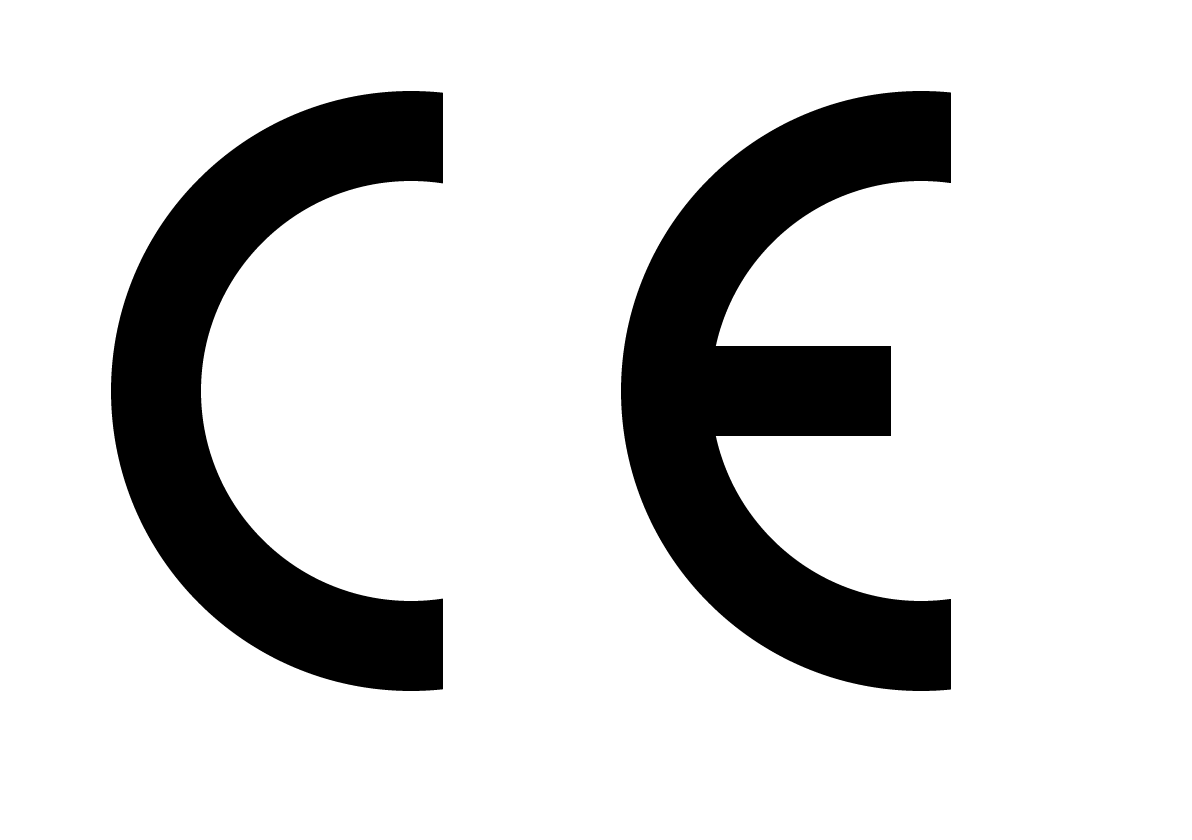
The letters, the proportions, the 5 mm minimum height, who affixes the marking, where it goes and the rule on other marks are in CE marking logo.
The style may differ; the proportions may not. The Blue Guide says the marking “can take different forms (e.g. colour, solid/hollow) as long as it remains visible, legible and respects its proportions”, and that it must be indelible, “so that it cannot be removed under normal circumstances without leaving noticeable traces” (Blue Guide, section 4.5.1.4). Your Europe lists the same design requirements, with “both letters must have the same vertical dimension” (Your Europe). Where a notified body took part in the production control phase, its identification number follows the marking (Decision No 768/2008/EC, Art. R12(3)).
A CE marking is valid because of the work behind it, not the logo
By affixing the CE marking, the manufacturer indicates that it takes responsibility for the product’s conformity with every requirement of the law that provides for the marking (Art. 30(3)Regulation (EC) No 765/2008, accreditation and market surveillance (CE marking)Article 30, paragraph 3Click opens the article on EUR-Lex. of Regulation (EC) No 765/2008). The marking comes last. For electrical equipment the manufacturer draws up the technical documentation and carries out the conformity assessment; where that shows compliance, it draws up the EU declaration of conformity and affixes the CE marking (Art. 6(2)Directive 2014/35/EU, Low Voltage Directive (consolidated text of 30 May 2026)Article 6, paragraph 2Click opens the article on EUR-Lex. of Directive 2014/35/EU). Other CE laws are built on the same model, Decision No 768/2008/EC (Art. R2). A logo, whether copied or drawn correctly, carries none of that work.
What the marking does not show, in the Commission’s words: “a CE marking does not indicate that a product have been approved as safe by the EU or by another authority. It does not indicate the origin of a product either.” (European Commission, CE marking). A product made in China carries a valid CE marking when a CE law covers it, it meets that law and its manufacturer did the work, as one made in the EU does.
The Blue Guide, section 4.5.1.1: the CE marking “is affixed on products that will be placed on the EEA and Turkish market, whether they are manufactured in the EEA, in Turkey or in another country”. It is “a key indicator (but not proof) of a product’s compliance with EU legislation”, and “CE marking does not indicate that a product was made in the European Union” (Blue Guide).
If the product is sold under your own name or brand, you are the manufacturer: the assessment, the declaration and the marking are yours (Art. 10Directive 2014/35/EU, Low Voltage Directive (consolidated text of 30 May 2026)Article 10Click opens the article on EUR-Lex. of Directive 2014/35/EU). How the whole chain fits together is on CE marking.
What the mark and each document must show
An authority starts with the same things. The Blue Guide calls it the first level of control: “documentary and visual checks, for example regarding the CE marking and its affixing, the availability of the EU declaration of conformity, the information accompanying the product and the correct choice of conformity assessment procedures”; for an online offer, it is “checking the information available on the website where the product is offered for sale” (Blue Guide, section 7.4).
| What to look at | What the law says it must be | What a gap is |
|---|---|---|
| The CE marking | The Annex II form, on the product or its data plate, affixed before the product is placed on the market (Art. 17Directive 2014/35/EU, Low Voltage Directive (consolidated text of 30 May 2026)Article 17Click opens the article on EUR-Lex. of Directive 2014/35/EUDirective 2014/35/EU, Low Voltage Directive (consolidated text of 30 May 2026)The whole regulationClick opens the law on the EU Publications Office.) | Formal non-compliance if it is affixed against Art. 30Regulation (EC) No 765/2008, accreditation and market surveillance (CE marking)The whole regulationClick opens the law on the EU Publications Office. of Regulation (EC) No 765/2008Regulation (EC) No 765/2008, accreditation and market surveillance (CE marking)The whole regulationClick opens the law on the EU Publications Office. or Art. 17Directive 2014/35/EU, Low Voltage Directive (consolidated text of 30 May 2026)The whole regulationClick opens the law on the EU Publications Office. of Directive 2014/35/EUDirective 2014/35/EU, Low Voltage Directive (consolidated text of 30 May 2026)The whole regulationClick opens the law on the EU Publications Office., or not affixed (Art. 22(1)Directive 2014/35/EU, Low Voltage Directive (consolidated text of 30 May 2026)Article 22, paragraph 1Click opens the article on EUR-Lex. of Directive 2014/35/EUDirective 2014/35/EU, Low Voltage Directive (consolidated text of 30 May 2026)The whole regulationClick opens the law on the EU Publications Office., points (a), (b)) |
| The EU declaration of conformity | The model structure of Annex IV, continuously updated, translated into the language or languages the EU country where the product is placed or made available requires; one declaration covers every EU law that applies (Art. 15Directive 2014/35/EU, Low Voltage Directive (consolidated text of 30 May 2026)Article 15Click opens the article on EUR-Lex. of Directive 2014/35/EUDirective 2014/35/EU, Low Voltage Directive (consolidated text of 30 May 2026)The whole regulationClick opens the law on the EU Publications Office.) | Not drawn up, or not drawn up correctly: formal non-compliance (Art. 22(1)Directive 2014/35/EU, Low Voltage Directive (consolidated text of 30 May 2026)Article 22, paragraph 1Click opens the article on EUR-Lex. of Directive 2014/35/EUDirective 2014/35/EU, Low Voltage Directive (consolidated text of 30 May 2026)The whole regulationClick opens the law on the EU Publications Office., points (c), (d)) |
| The technical documentation | Drawn up by the manufacturer and kept for 10 years; the importer ensures it was drawn up and can be made available (Art. 6(3)Directive 2014/35/EU, Low Voltage Directive (consolidated text of 30 May 2026)Article 6, paragraph 3Click opens the article on EUR-Lex., Art. 8(2)Directive 2014/35/EU, Low Voltage Directive (consolidated text of 30 May 2026)Article 8, paragraph 2Click opens the article on EUR-Lex. of Directive 2014/35/EUDirective 2014/35/EU, Low Voltage Directive (consolidated text of 30 May 2026)The whole regulationClick opens the law on the EU Publications Office.) | Not available or not complete: formal non-compliance (Art. 22(1)Directive 2014/35/EU, Low Voltage Directive (consolidated text of 30 May 2026)Article 22, paragraph 1Click opens the article on EUR-Lex. of Directive 2014/35/EUDirective 2014/35/EU, Low Voltage Directive (consolidated text of 30 May 2026)The whole regulationClick opens the law on the EU Publications Office., point (e)) |
| The manufacturer’s and the importer’s details | Name and postal address on the product, or where that is not possible on the packaging or a document with it (Art. 6(6)Directive 2014/35/EU, Low Voltage Directive (consolidated text of 30 May 2026)Article 6, paragraph 6Click opens the article on EUR-Lex., Art. 8(3)Directive 2014/35/EU, Low Voltage Directive (consolidated text of 30 May 2026)Article 8, paragraph 3Click opens the article on EUR-Lex. of Directive 2014/35/EUDirective 2014/35/EU, Low Voltage Directive (consolidated text of 30 May 2026)The whole regulationClick opens the law on the EU Publications Office.) | Absent, false or incomplete: formal non-compliance (Art. 22(1)Directive 2014/35/EU, Low Voltage Directive (consolidated text of 30 May 2026)Article 22, paragraph 1Click opens the article on EUR-Lex. of Directive 2014/35/EUDirective 2014/35/EU, Low Voltage Directive (consolidated text of 30 May 2026)The whole regulationClick opens the law on the EU Publications Office., point (f)) |
For each of these findings the EU country requires the operator to put an end to the non-compliance. If it persists, the EU country takes all appropriate measures to restrict or prohibit the product or to have it recalled or withdrawn (Art. 22(1)Directive 2014/35/EU, Low Voltage Directive (consolidated text of 30 May 2026)Article 22, paragraph 1Click opens the article on EUR-Lex., Art. 22(2)Directive 2014/35/EU, Low Voltage Directive (consolidated text of 30 May 2026)Article 22, paragraph 2Click opens the article on EUR-Lex. of Directive 2014/35/EU).
A reseller has its own duty. Before making electrical equipment available, a distributor verifies that it bears the CE marking, that it comes with the required documents and with instructions and safety information in a language consumers in that EU country understand, and that the manufacturer and the importer have put their details on it (Art. 9(2)Directive 2014/35/EU, Low Voltage Directive (consolidated text of 30 May 2026)Article 9, paragraph 2Click opens the article on EUR-Lex. of Directive 2014/35/EU). The declaration’s content, who signs it and a template are on declaration of conformity. The EU operator named on the product is covered in EU Responsible Person.
Misuse of the CE marking is penalised by each EU country
The EU sets the duty to penalise, not the amount. EU countries must ensure the correct implementation of the regime governing the CE marking and take appropriate action in the event of improper use. They must also provide for penalties, which may include criminal sanctions for serious infringements, proportionate to the seriousness of the offence and an effective deterrent against improper use (Art. 30(6)Regulation (EC) No 765/2008, accreditation and market surveillance (CE marking)Article 30, paragraph 6Click opens the article on EUR-Lex. of Regulation (EC) No 765/2008). Penalties for infringements of that Regulation must be effective, proportionate and dissuasive, and may be increased if the operator has previously committed a similar infringement (Art. 41Regulation (EC) No 765/2008, accreditation and market surveillance (CE marking)Article 41Click opens the article on EUR-Lex. of Regulation (EC) No 765/2008). Neither article sets an amount. The Directive on electrical equipment has a penalties article of its own (Art. 24Directive 2014/35/EU, Low Voltage Directive (consolidated text of 30 May 2026)Article 24Click opens the article on EUR-Lex. of Directive 2014/35/EU).
What the authority can do to the product:
- Require the operator to take corrective action, prohibit or restrict the making available of the product, and order it withdrawn or recalled (Art. 14(4)Regulation (EU) 2019/1020, Market Surveillance RegulationArticle 14, paragraph 4Click opens the article on EUR-Lex. of Regulation (EU) 2019/1020, points (g), (h)).
- Acquire product samples, including under a cover identity, and inspect them (Art. 14(4)Regulation (EU) 2019/1020, Market Surveillance RegulationArticle 14, paragraph 4Click opens the article on EUR-Lex. of Regulation (EU) 2019/1020, point (j)).
- Stop a product at the border. Where it concludes that a product may not be placed on the market because it does not comply with the Union law that applies to it, the authority requires the authorities in charge of controls on products entering the Union market not to release it for free circulation, with the notice “Product not in conformity — release for free circulation not authorised — Regulation (EU) 2019/1020Regulation (EU) 2019/1020, Market Surveillance RegulationThe whole regulationClick opens the law on the EU Publications Office.” (Art. 28(2)Regulation (EU) 2019/1020, Market Surveillance RegulationArticle 28, paragraph 2Click opens the article on EUR-Lex. of Regulation (EU) 2019/1020; those authorities are designated under Art. 25(1)Regulation (EU) 2019/1020, Market Surveillance RegulationArticle 25, paragraph 1Click opens the article on EUR-Lex. of Regulation (EU) 2019/1020).
Online listings are covered too. Information society service providers cooperate with the authorities, at their request and in specific cases, in any action to eliminate or mitigate the risks of a product offered for sale online through their services (Art. 7(2)Regulation (EU) 2019/1020, Market Surveillance RegulationArticle 7, paragraph 2Click opens the article on EUR-Lex. of Regulation (EU) 2019/1020). Where no other effective means are available to eliminate a serious risk, the authority may also require the removal of content referring to the product from an online interface, or the display of a warning; if that is not complied with, it may require information society service providers to restrict access to the interface (Art. 14(4)Regulation (EU) 2019/1020, Market Surveillance RegulationArticle 14, paragraph 4Click opens the article on EUR-Lex. of Regulation (EU) 2019/1020, point (k)). That power depends on a serious risk. A missing or wrongly drawn mark is a finding of formal non-compliance, handled as in the section above.
What you can skip
Sources
14 sources
- Parliament record of a question, not lawEuropean Parliament, written question P-5938/2007 by Zuzana Roithova, 22 November 2007, "China Export (CE) mark feeding off the reputation of the European Conformité européenne (CE) mark". Accessed 2026-10-05
- Commission answer of 2008, not lawEuropean Parliament, answer to question P-5938/07 given by Mr Verheugen on behalf of the Commission, 12 March 2008, OJ C 191, 29.7.2008 - the Commission is not aware of a "China export mark". Accessed 2026-10-05
- Art. 2(20)Regulation (EC) No 765/2008, accreditation and market surveillance (CE marking)Article 2, point 20Click opens the article on EUR-Lex., 30(1)Regulation (EC) No 765/2008, accreditation and market surveillance (CE marking)Article 30, paragraph 1Click opens the article on EUR-Lex., 30(2)Regulation (EC) No 765/2008, accreditation and market surveillance (CE marking)Article 30, paragraph 2Click opens the article on EUR-Lex., 30(3)Regulation (EC) No 765/2008, accreditation and market surveillance (CE marking)Article 30, paragraph 3Click opens the article on EUR-Lex., 30(4)Regulation (EC) No 765/2008, accreditation and market surveillance (CE marking)Article 30, paragraph 4Click opens the article on EUR-Lex., 30(5)Regulation (EC) No 765/2008, accreditation and market surveillance (CE marking)Article 30, paragraph 5Click opens the article on EUR-Lex., 30(6)Regulation (EC) No 765/2008, accreditation and market surveillance (CE marking)Article 30, paragraph 6Click opens the article on EUR-Lex., 41Regulation (EC) No 765/2008, accreditation and market surveillance (CE marking)Article 41Click opens the article on EUR-Lex., Annex IIRegulation (EC) No 765/2008 - definition of the CE marking, its general principles, penalties, and its form in Annex II. Art. 30, Annex II and Art. 41 read the same in the consolidated text of 16 July 2021 (documentation only, no legal effect). Accessed 2026-10-05
- Art. R2, R11, R12Decision No 768/2008/EC - the model duties of manufacturers, the rules for affixing the CE marking and the number of a notified body. Accessed 2026-10-05
- Art. 6(2)Directive 2014/35/EU, Low Voltage Directive (consolidated text of 30 May 2026)Article 6, paragraph 2Click opens the article on EUR-Lex., 6(3)Directive 2014/35/EU, Low Voltage Directive (consolidated text of 30 May 2026)Article 6, paragraph 3Click opens the article on EUR-Lex., 6(6)Directive 2014/35/EU, Low Voltage Directive (consolidated text of 30 May 2026)Article 6, paragraph 6Click opens the article on EUR-Lex., 8(2)Directive 2014/35/EU, Low Voltage Directive (consolidated text of 30 May 2026)Article 8, paragraph 2Click opens the article on EUR-Lex., 8(3)Directive 2014/35/EU, Low Voltage Directive (consolidated text of 30 May 2026)Article 8, paragraph 3Click opens the article on EUR-Lex., 8(8)Directive 2014/35/EU, Low Voltage Directive (consolidated text of 30 May 2026)Article 8, paragraph 8Click opens the article on EUR-Lex., 9(2)Directive 2014/35/EU, Low Voltage Directive (consolidated text of 30 May 2026)Article 9, paragraph 2Click opens the article on EUR-Lex., 10Directive 2014/35/EU, Low Voltage Directive (consolidated text of 30 May 2026)Article 10Click opens the article on EUR-Lex., 15Directive 2014/35/EU, Low Voltage Directive (consolidated text of 30 May 2026)Article 15Click opens the article on EUR-Lex., 17Directive 2014/35/EU, Low Voltage Directive (consolidated text of 30 May 2026)Article 17Click opens the article on EUR-Lex., 22Directive 2014/35/EU, Low Voltage Directive (consolidated text of 30 May 2026)Article 22Click opens the article on EUR-Lex., 24Directive 2014/35/EU, Low Voltage Directive (consolidated text of 30 May 2026)Article 24Click opens the article on EUR-Lex., Annex IVDirective 2014/35/EU (low-voltage electrical equipment), consolidated text of 30 May 2026 (documentation only, no legal effect), the example of a CE law for mains-powered goods - duties of manufacturers, importers and distributors, the EU declaration of conformity and its model, affixing, formal non-compliance, penalties. Accessed 2026-10-05
- Art. 5(1)(e)Directive 2006/42/EC, Machinery Directive (consolidated text of 30 May 2026)Article 5, paragraph 1, point (e)Click opens the article on EUR-Lex.Directive 2006/42/EC (machinery) - the manufacturer ensures the EC declaration of conformity accompanies the machinery. Accessed 2026-10-05
- Art. 10(9)Directive 2014/53/EU, Radio Equipment Directive (consolidated text of 30 May 2026)Article 10, paragraph 9Click opens the article on EUR-Lex.Directive 2014/53/EU (radio equipment) - each item comes with a copy of the EU declaration of conformity or a simplified one with an internet address. Accessed 2026-10-05
- Art. 8(8)Regulation (EU) 2016/425, Personal Protective Equipment RegulationArticle 8, paragraph 8Click opens the article on EUR-Lex.Regulation (EU) 2016/425 (personal protective equipment) - the manufacturer provides the EU declaration of conformity with the equipment or gives the internet address in the instructions. Accessed 2026-10-05
- Art. 4(4)Regulation (EU) 2019/1020, Market Surveillance RegulationArticle 4, paragraph 4Click opens the article on EUR-Lex., 4(5)Regulation (EU) 2019/1020, Market Surveillance RegulationArticle 4, paragraph 5Click opens the article on EUR-Lex., 7(2)Regulation (EU) 2019/1020, Market Surveillance RegulationArticle 7, paragraph 2Click opens the article on EUR-Lex., 14(4)Regulation (EU) 2019/1020, Market Surveillance RegulationArticle 14, paragraph 4Click opens the article on EUR-Lex., 25(1)Regulation (EU) 2019/1020, Market Surveillance RegulationArticle 25, paragraph 1Click opens the article on EUR-Lex., 28(2)Regulation (EU) 2019/1020, Market Surveillance RegulationArticle 28, paragraph 2Click opens the article on EUR-Lex.Regulation (EU) 2019/1020 (market surveillance) - the EU-established economic operator and the details on the product, cooperation of online service providers, the powers of market surveillance authorities, refusal of release for free circulation. Accessed 2026-10-05
- Sections 4.4, 4.5.1, 7.4Commission Notice, The Blue Guide on the implementation of EU product rules 2022 (2022/C 247/01) - the declaration and its model, the CE marking, first-level checks. Accessed 2026-10-05
- Commission page, not lawEuropean Commission, CE marking - what the marking does and does not show, and the official image files. Accessed 2026-10-05
- Commission guidance, not lawYour Europe (European Commission), CE marking - design requirements, notified bodies, voluntary certificates; last checked by the Commission 17 July 2026, accessed 2026-10-05
- Commission database, not lawEuropean Commission, NANDO - the database of notified bodies. Accessed 2026-10-05 (the page loads; the search runs in the browser)
- UK government guidance, not EU lawUK government, Placing UKCA or CE marked products on the market in Great Britain (updated 21 August 2026) - the spelling of CE. Accessed 2026-10-05